• The Live Action Flick directed by James Gunn has some teething issues…

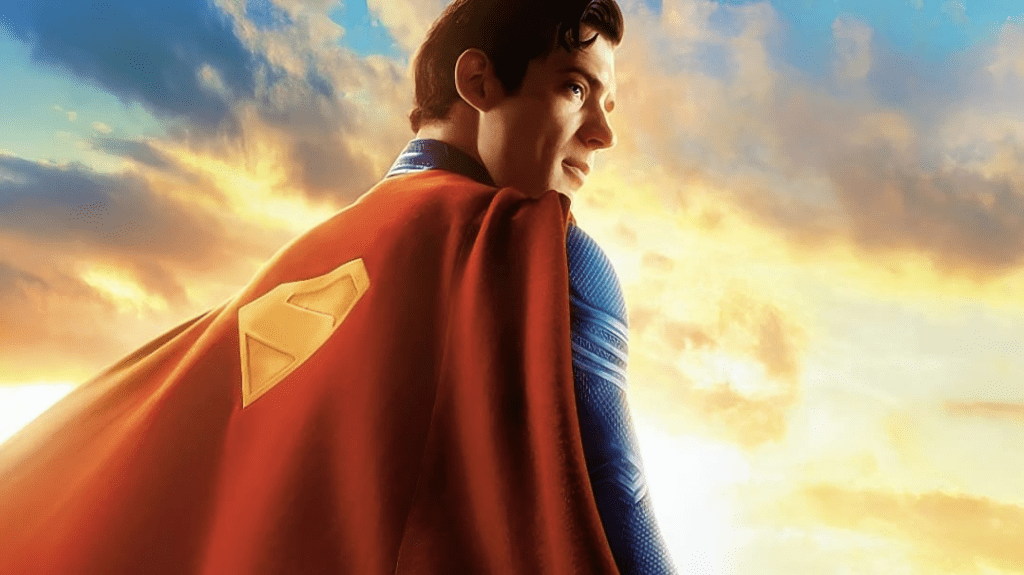
    It’s been a while since we have got a live action film dedicated to Superman with the last feature being Man of Steel (2013) directed by Zack Snyder. Snyder’s version of Superman really felt like a departure of who the character was, in being rather sullen and lacking the warmth you would expect from one of the most selfless and altruistic fictional characters ever written.

    I make this point to showcase how Gunn’s interpretation of Superman leans more into his comic book counter part in being a symbol of hope and boundless optimism. In that regard, I would say the film accomplishes the main task in establishing the core values and principles of who Superman is and embraces the corny aspects.

    But that alone does not propel this film into a ‘great’ epic that is deserving of the ‘Big Blue’. Superman (2025) is a film that I do not like a great deal, despite me wanting to love it.

    Before I approached this film: I had this impression from James Gunn that he was not really interested in making a Superman movie, but this was something that he was mandated by Warner Bros to do as he is now spearheading the ‘DC Cinematic Universe’ (DCU). I had some recollection of him saying in an Interview years ago on how he found Superman to be a rather uninteresting character. Now my memory could be faulty and this is all speculation on my part, but I just could not shake the feeling that this was a film made by obligation rather than something that James Gunn wanted to create from the very beginning and was really passionate about making.

    David Corenswet playing Superman has the charisma and charm, being able to switch between ‘Clark Kent’ and ‘Superman’ with ease. His co-star in Rachel Brosnaham playing Lois Lane is a near perfect casting choice. Both these actors have great on-screen chemistry, it is just a shame that the relationship between these two characters feel under baked (now I understand the film makes both of them in the early days of their relationship, but the relationship lacks real emotional punch and development).

    That being said the movie does a great job in leaning into the fantastical and bombastic nature of comic books being wild and frenetic and understands the assignment in making the audience understand why Superman is the way he is. I just find the film lacking in carrying emotional weight that a character like Superman should carry in spades.

    This is where the problem lies, the pacing and structure of the film collapses under its own weight. The film has too many characters that either lack real development with the over abundance of jokes under cutting the tension. We do not see Superman really grapple with the decisions he makes and really contemplate how his actions can have consequences, despite his noble intentions.

    The film does not earn its heart felt and endearing moments and instead leans hard onto the big action set pieces that can be fun and entertaining, yet when all that washes over there is an absence at really digging deeper at the themes and ideas of Superman. When the chips are down, Superman (2025) in my eyes fails in really making me care about the world and characters at stake.

    I have yet to even comment on the villain ‘Lex Luthor’ played by Nicholas Hoult, which despite Hoult trying to do the best he can. The Script for ‘Lex Luthor’ makes him a whiny brat and not the calculated menace that he ought to be working as a foil to Superman. To me it came across like character assassination, contributing to a weaker narrative and emotional investment.

    To conclude, Superman (2025) is a film I am truly glad was made and despite my grievances James Gunn has made a good starting off point for the ‘Man of Tomorrow’ with flair and delight. I just wish it had stuck the landing point for the here and now.

  • This is yet to be the second-coming…

    Warning: Potential Spoilers so be warned!

    It’s hard to talk about things I love. And its even harder to talk about things that put me in a puddle of conflicted emotions, irrespective of the love that has formed.

    I am a fan of the show that preceded this (Daredevil | 2015-2018) – being unceremoniously cancelled by the streaming giant Netflix, despite the excellence of its last Season, Season Three way back in 2018.

    It was a delight to fans of the show when Disney went ahead and brought back this Series after so long- albeit with a new coat of paint, being aired on its new streaming platform Disney +.

    From what I gather, Daredevil Born Again had been mired with a plethora of production issues from re-shoots, original supporting cast not returning to coming back again, writers strike, changing of Showrunner and Executive Producer.

    From what we ended up getting, the Man Without Fear becomes a shell of himself and what we have is a series that is an uneven mess, whilst struggling to find a strong foothold to reach the daring heights of the original series, let alone transcend it.

    And I think that is where the problem lies: I think Daredevil Born Again is trying desperately to separate itself from the original series. That in itself is not a problem, but the problem arises from the failure to understand the characters at play.

    There is a lack of consistent tone, focus and thematic storytelling with Daredevil Born Again, alongside the new supporting cast in Matt Murdok’s life being rather flat and uninteresting. There is no emotional investment that the audience can latch onto with these new supporting cast members being rather surface level.

    The action and set pieces that the series was renown for has returned with some middling results. There is some noticeable CG used in the action and though the violence remains, there is a lack of ‘punch’ compared to the original fight scenes with the cinematography at times making it hard to see the intensity of the fight.

    The new villain feels like a massive wasted opportunity that feels more like a footnote with no real depth and exploration. I would say more, but to say less is more of a compliment.

    Besides any gripes and problems that I have with the new season of Daredevil. In terms of performances, the likes of Charlie Cox as Matt Murdock and Vincent D’Onofrio as Kingpin remain golden. The dynamic between the two on-screen works wonders, despite the dialogue being rather subpar at times.

    I really wanted to love the glorious return of the Daredevil. But this time, rather than have a show than can stand on its two feet, which respect and advance the foundations laid from its predecessor.

    It limps forward battered and bruised, though with glimmers of hope.

    I’ll still be around and watch what comes next because at the end of the day, the love for Daredevil ain’t lost on me yet.

  • Bonnie and Clyde: On-This-Day Thursday — Films Fatale

    The influential film Bonnie and Clyde (1967) shaped how we see Hollywood today both past and
    present and serves as a reminder for Hollywood to change from stale and repetitive content kicking
    off a Hollywood revolution in how films can be made.

    The context remains important to understanding the films longstanding significance in cultural and social discourse in how Bonnie and Clyde (1967) is a biographical western style film of a romantic couple descending into crime. The film’s plot was set in the 1930s of The Great Depression (1929-1939)of America which resulted in a habitual declineof the economy and many civilians were left homeless or deeply consumed in financialunrest.


    This film had a very ambitious and bold task at hand. It is a film that aims to present a somewhat historical image to the lives of two infamous criminals (Bonnie Parker and Clyde Barrow) who are the destructive forces of the narrative, living very volatile and risky lifestyles. Whilst the film also wanted to not stray away from its core values of presenting America and its inhabitants with scrutinising depth and quality- this film does not detract from illustrating the inequality and lack of opportunities to those specifically of working-class and provides to us a sense of realism and
    grounded scope to how the financial and social crisis of America is an indirect extension to the main
    character motivations of Bonnie Parker and Clyde Barrow.

    Both these characters are in way by- products of the social climate as they choose to deviate towards crime to gain social mobility, notoriety and adrenaline coupled alongside a source of tangible income- albeit unstable and highly illegal. The financial predicament of America resulted in an increase of juvenile crime and delinquency, which the movie subtly portrays rather than censoring and completely cutting from the final cut of the film.


    Many films released during the period of Bonnie and Clyde had to follow a strict conventional style
    of filmmaking and production, yet Bonnie and Clyde chooses to showcase its brutal and
    uncompromising style of narrative and filmmaking, to reveal to the spectators the harsh reality of
    life and how unfiltered acts of violence and conflict is not ‘taboo,’ but rather a potent tool to an
    already flavourful arsenal of ingredients that is compounded to an already plentiful array of creative
    expression that is available to every director.

    The depiction of violence and conflict is a highly controversial topic and subject to extreme dissemination of disgust and disapproval from many critics and viewers- the masses of people who saw Bonnie and Clyde upon release branded this film with hardly any lukewarm reception with major concerns circulating on how violence seems to be glorified and satirised and a notable journalist/critic from The New York Times states how “it is a cheap piece of bald-faced slapstick comedy” (Bosley Crowther).


    Movies had entered the realm of being ‘safe’ on Bonnie and Clyde’s original release in 1967 and
    from a business perspective this can be understandable, as the usage of ‘Ford model’ became
    prominent which can allow wider profit margins. Advertising for films and gaining investors is less
    daunting due to the tried and tested approach to filmmaking, yet the creativity and artistic scope of
    a film is diminished. A modern example, of the ‘Ford Model’ utilised to an extent was when Disney
    created their own extended Marvel Cinematic Universe (coined ‘MCU’). The superhero genre
    became profitable, and Disney were able to perfect their formula for producing entertaining and
    expansive movies which is linked to a shared universe with many movies down the pipeline with set
    release dates/schedules. The ‘Ford Model’ is results oriented, thus following tight schedules and
    rigorous/meticulous planning.

    Many have pointed out that Disney’s Marvel films can feel almost
    rushed with the quality of each independent film not fully branched out or developed- resulting in
    wasted opportunities of storytelling with many directors not being able to achieve their intended
    vision.


    Hollywood after the Hays Code transitioned into the typical age rating system made by the MPAA
    (Motion Picture Association of America) which for the most part seems very reasonable and not
    necessarily obstructive to a filmmaker. The main issue with rating systems is that it remains entirely
    subjective to personal opinions on minimum age requirements, this day and age rating systems feel
    redundant as (labelled) ‘mature content’ (e.g., drug abuse) is now entering younger markets not
    necessarily as restrictive as the Hays period.


    Linking back to Bonnie and Clyde, Warner Bros, and Arthur Penn (director) chose to go against the
    conventional standards of the Hays Production Code-producing a film that is heralded for its flaws
    and celebrated as an undeniable classic. Despite many people pointing out how the characters like
    Bonnie are arguably poorly written being superficial in characterisation, whilst promoting high levels
    of naivety, this is the unique selling point of the film. Bonnie and Clyde work well because it has no
    moral compass, and the unyielding tumult and disorder is used as a narrative tool to accentuate
    humanities’ fears of moral degradation, which is very upsetting to the highly religious and liberal
    America of the time.

    What the film does is highlight two people descending on an adventure of
    trouble and pleasure, yet this permeates into a fun, bombastic and thrilling experience for all
    moviegoers to watch and remain suspended in disbelief. It is a film that knew how to be itself and
    knew that film as a visual medium can act as an experience and not just a source of entertainment.
    Another point to mention, the release of Bonnie and Clyde in 1967 is part of the emergence of New
    Hollywood (where vertical integration/new independent studios and outside collaboration is
    encouraged becoming the new ‘de facto standard’ used by many major studios). The film is not just
    differentiating itself from the filmmaking tropes of The Golden Age (it still utilised the 3-act story
    structure and linear narrative). However, it expanded upon the core values of filmmaking creating
    new leaps to how the industry designs and creates movies. There is no ‘status quo’ that needs to be
    followed, nor should films be designed to meet preconceived expectations.


    Food for thought, if anything Bonnie and Clyde is a sharp meta commentary on how the established
    industry (Golden Age of Hollywood) is unsustainable in the long term, requiring a breath of new life
    with clear definition of visual storytelling and creative talent at the helm and forefront of designing
    awe-inspiring cinematic work. It (i.e., Hollywood) will inherently need a sort of ‘renaissance’ and update patch and ‘New Hollywood’ was able to fill in the blank void of intrinsic artistry, transiting onwards to modern Hollywood and thus forming the industry we see today. There is no defined way of making films and that is a gift worth savouring. Bonnie and Clyde are the perpetrators leading the charge and making us remember how films are boundless and imaginative.

  • Halt and Catch Fire (2014-2017)

    ========================================================================

    Now I should introduce myself.

    My name is Tahmid Chowdhury who aspires to work in film and television with the dream to become a writer/director in creating compelling stories.

    I always loved a good story and would often reflect and analyse the media I consume, which led me down the path of creating this site.

    This blog is a place where I talk about films, television, video games and much more.

    I don’t know where this will go or who this will find. But I know for sure about one thing…

    Let’s be excellent to each other.

    If you wish to contact me:

    tahmid951@gmail.com